Benazir Income Support Programme News: What’s Actually Changing and Who It Affects
If you’ve been trying to keep up with Benazir Income Support Programme news and finding it hard to separate real updates from rumour, you’re not alone. Millions of Pakistani families — in cramped urban neighbourhoods and distant rural villages alike — depend on BISP to cover basic expenses, and even a single missed payment or eligibility change can throw a household budget into chaos. Quikzap has pulled together the latest verified developments in one place: from the Kafalat payment increase to digital banking changes, NSER survey updates, and what the newer PMT score thresholds actually mean for existing and new beneficiaries.
What Is the Benazir Income Support Programme?
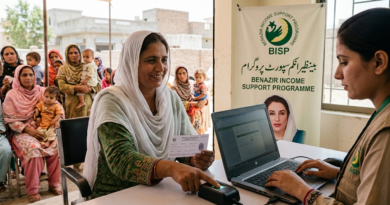
Benazir Income Support Programme News is Pakistan’s largest federal cash transfer programme, launched in 2008 to provide direct financial assistance to the country’s poorest households — specifically targeting women as primary recipients. Think of it less like a charity and more like a floor beneath the economy: it doesn’t lift everyone into prosperity, but it stops the most vulnerable from falling below a survivable baseline. The programme has grown from covering a few million families at its launch to targeting over 10 million households, and its annual budget allocation has risen sharply, crossing Rs. 700 billion in the latest federal budget cycle. Cash assistance flows quarterly under the Benazir Kafaalat stream, while sub-programmes like Taleemi Wazaif and Nashonuma extend support into education and maternal health.
Within Pakistan’s social protection architecture, Benazir Income Support Programme News sits at the centre. The Ehsaas programme — though separately branded at times — operates through much of the same eligibility infrastructure, including the same NADRA verification system and the National Socio-Economic Registry (NSER) that generates every household’s poverty scorecard. That registry is the engine behind the entire system. Get the data wrong there, and everything downstream — payments, scholarships, nutritional support — gets affected. Understanding BISP means understanding that single database first.
Benazir Income Support Programme News
Kafalat Payment Increase
The quarterly Kafalat installment has been raised to Rs. 13,500 per eligible female beneficiary, up from Rs. 10,500 previously. A further increase to Rs. 14,500 has been announced for select beneficiaries following a revised payment structure under the Benazir Khawateen Kafalat Program. Payments are released quarterly and can be collected at designated biometric ATMs, partner bank branches, or through mobile wallet services like JazzCash and EasyPaisa depending on the disbursement method assigned to each beneficiary.
Social Protection Wallet and SIM Distribution
BISP has been piloting a Social Protection Wallet, which allows beneficiaries to receive payments directly into a mobile account issued under their own CNIC. A SIM distribution drive — reviewed by the Federal Minister for Poverty Alleviation — aims to ensure each registered beneficiary holds an active number on their own identity card, eliminating the long-standing problem of payments being collected by male relatives on behalf of women who hold no SIM of their own.
BISP Sahulat Bank Accounts
Benazir Income Support Programme News:Following a framework released by the State Bank of Pakistan, approximately 9.3 million BISP beneficiaries are being enrolled in dedicated “BISP Sahulat Accounts” — basic banking accounts that can be opened in a single visit to a mapped branch nearby. Six additional banks have been brought into the programme to reduce geographic bottlenecks, especially in rural Punjab, southern Sindh, and parts of Balochistan where banking infrastructure has historically been thin.
8171 Portal Relaunch and Digital Verification
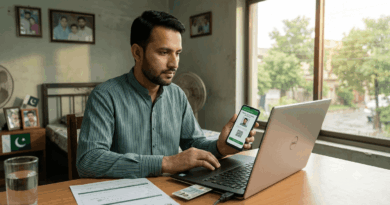
The 8171 web portal has been updated to allow beneficiaries to check their eligibility status, view their PMT score, and track payment readiness without visiting an office. The same information is accessible by SMS — simply send your 13-digit CNIC number (no dashes) to 8171 and you’ll receive a reply within seconds. This matters most in areas where tehsil offices are a long bus ride away and working days are too precious to spend in queues.
Real-Time BNP Digital Dashboard
BISP has launched a real-time Benazir Nashonuma Programme digital dashboard to track disbursement data and case-level outcomes across districts. This is part of a broader shift toward evidence-based administration that international partners, including the World Bank, WHO, and UNICEF, have been pushing for in their ongoing engagement with BISP leadership.
| Update Category | What Changed | Who Is Affected | How to Act |
|---|---|---|---|
| Quarterly Kafalat Payment | Raised from Rs. 10,500 to Rs. 13,500 (Rs. 14,500 for some) | All active Kafaalat beneficiaries | Collect at designated point; check status via 8171 |
| Banking Integration | BISP Sahulat Accounts via SBP framework; 6 new partner banks added | Beneficiaries without existing accounts | Visit mapped branch with CNIC |
| Social Protection Wallet | Pilot for direct mobile wallet disbursement | Beneficiaries with CNIC-registered SIMs | Ensure SIM is active and registered on own CNIC |
| 8171 Portal Upgrade | Real-time PMT score, payment status, eligibility check available online | All current and prospective beneficiaries | Visit 8171.bisp.gov.pk or SMS CNIC to 8171 |
| PMT Score Threshold | Stricter threshold applied; families above 32–34 may lose eligibility | Borderline cases updated via NSER survey | Visit nearest BISP tehsil office for dynamic survey |
| Taleemi Wazaif Stipend | Educational stipend increased by Rs. 500; girls receive higher amount than boys | Children of enrolled BISP families with 70% school attendance | Confirm child’s school attendance record |
Who Is Eligible and What Has Changed
Core Eligibility Criteria
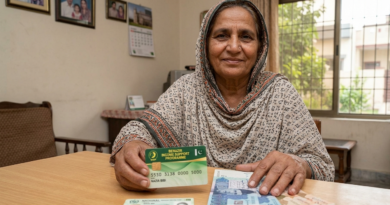
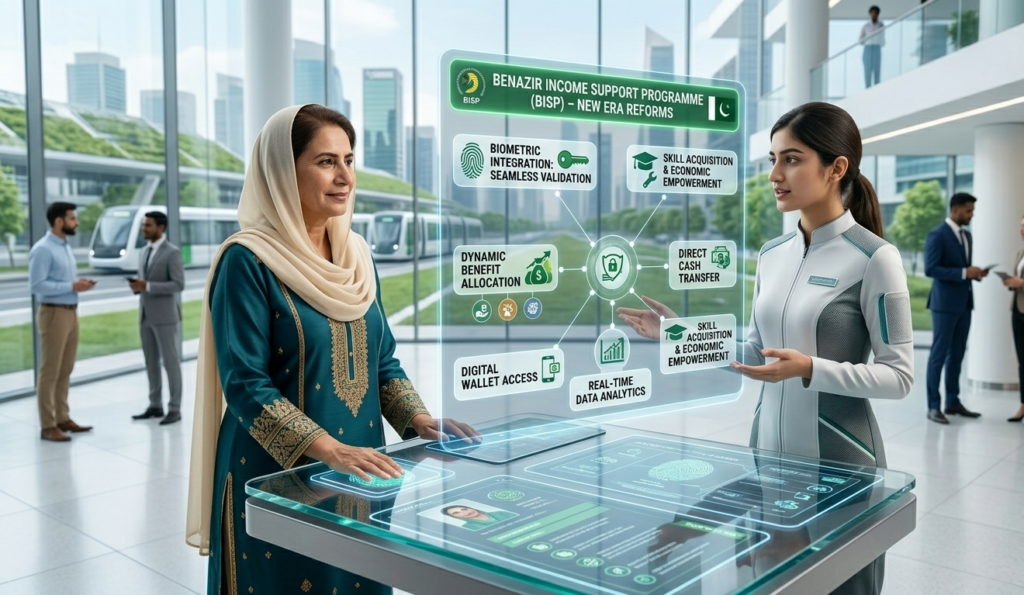
To qualify for BISP Kafalat cash assistance, an applicant must be a female head of household — this includes married women managing household finances, widows, divorced women, and those who are separated. A valid, active CNIC issued by NADRA is non-negotiable; without it, the application cannot proceed. The household must also fall below the BISP poverty threshold as measured by the Proxy Means Test (PMT) score, which is generated through the NSER dynamic survey. Families earning above Rs. 25,000 per month, or those holding significant assets such as a car, air conditioner, or agricultural land, are likely to receive a higher PMT score that pushes them out of eligibility.
PMT Score — The Number That Decides Everything
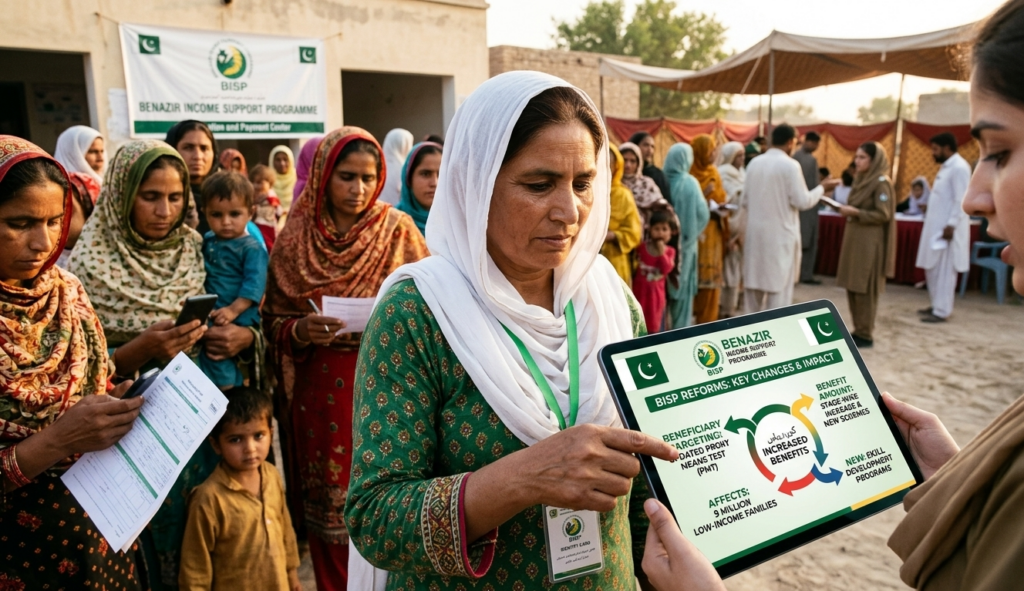
The PMT score is a poverty index between 0 and 100, where a lower number indicates deeper financial hardship. Historically, a score below 32 qualified a household for Kafalat payments. A February update tightened this slightly, with the active threshold now referenced between 32 and 34 depending on the sub-programme and district-level implementation. Scores aren’t fixed — they’re recalculated whenever a household undergoes a new dynamic survey through BISP or NADRA, which happens roughly every two to three years, or whenever a family visits a BISP tehsil office to update their data.
Recent NSER Dynamic Registry Changes
The NSER has been refreshed, giving previously unregistered households a fresh window to participate. Families that were surveyed years ago and have since seen their financial situation worsen — due to a death, divorce, job loss, or natural disaster — can request a re-survey. The dynamic nature of the registry is one of BISP’s strongest design features and also one of its least understood. Many families sit at home assuming their “old” status stands permanently. It doesn’t.
Documents Required
- Original CNIC of the female applicant (must be valid and not expired)
- B-Forms for all children under 18 in the household
- Proof of residence — a utility bill, tenancy agreement, or local verification letter
- Divorce deed or death certificate (for widows and divorced women, where applicable)
- Active mobile number registered on the applicant’s own CNIC
Edge Cases: Re-registration and Disqualification
Beneficiaries who have been receiving payments for three consecutive years may be reviewed for exit from the programme if their socioeconomic conditions have measurably improved — a practice designed to rotate support toward newly poor households. Those disqualified due to an outdated or incorrect PMT score have the right to request a re-assessment. Families in flood-affected areas have been given fast-track processing at special survey camps. Women whose thumbprints aren’t registered in NADRA’s biometric system — a documented issue affecting over 100,000 beneficiaries — are being issued special cards to enable payment collection without biometric authentication.
| PMT Score Band | Kafalat Cash Transfer | Taleemi Wazaif (Children) | Nashonuma (Maternal) |
|---|---|---|---|
| 0–20 (Deep poverty) | Fully eligible — Rs. 13,500/quarter | Eligible if child enrolled with 70%+ attendance | Eligible for pregnant/lactating mothers |
| 21–32 (Low income) | Eligible — Rs. 13,500/quarter | Eligible with attendance condition | Eligible |
| 33–40 (Borderline) | Cash transfer likely ineligible; under review | May still qualify — verify at BISP office | Verify at BISP tehsil office |
| Above 40 | Not eligible for Kafalat | Not eligible | Not eligible unless special exemption |
What Happens If a Beneficiary Misses Out?
Missing a quarterly Benazir Income Support Programme News payment doesn’t automatically mean the entitlement is lost — but the window to act is finite. If the 8171 portal shows “Payment Ready” but funds aren’t received, the first step is visiting the designated payment point with a valid CNIC within the disbursement period. Delays are sometimes caused by an expired CNIC, a SIM not registered on the beneficiary’s own identity card, a failed biometric scan, or a mismatch between NADRA records and BISP data. If the portal shows “Ineligible” and the household believes this is an error, the beneficiary should visit the nearest BISP tehsil office and request a dynamic survey update — bringing all relevant documents. Changes can take two to three weeks to reflect in the system, so acting early in the payment cycle matters.
Formal complaints can be lodged through the Benazir Income Support Programme News helpline, which provides guidance on unresolved payment issues, verification failures, and eligibility disputes. An e-katchery model — essentially a live online grievance session — has also been introduced at BISP headquarters, giving beneficiaries a direct line to senior officials for cases that local offices haven’t resolved. Neither channel guarantees instant resolution, but both create a documented record of the complaint, which is essential if the matter escalates to a formal review.
Common Misconceptions About BISP News and Updates
Myth: The 8171 SMS balance check is only for urban mobile users
The SMS service works on any basic mobile handset, including the most basic feature phone, as long as it has an active SIM. You don’t need a smartphone or internet access. Simply type your 13-digit CNIC number and send it to 8171 — the reply arrives in plain text within seconds. Rural beneficiaries in areas with even minimal cellular coverage can use this without visiting an office.
Myth: Once your PMT score is set, nothing can change it
This is one of the most damaging misconceptions circulating in both villages and low-income urban areas. The PMT score is recalculated each time a household undergoes an NSER dynamic survey. If a breadwinner has died, a marriage has ended, or a family has lost income and assets, requesting a fresh survey at a BISP tehsil office can result in a lower score and renewed eligibility. Waiting passively achieves nothing. Benazir Income Support Programme News.
Myth: Any website offering to “check BISP eligibility” is official
BISP authorities have explicitly warned that dozens of third-party websites using terms like “8171 check online” are not affiliated with the programme. The only verified channels are the SMS service (send CNIC to 8171), the official web portal at 8171.bisp.gov.pk, and in-person visits to BISP offices. Never enter your CNIC or banking details on an unknown website, and never pay any “registration fee” — BISP registration is free.
Myth: Educational stipends under Taleemi Wazaif are the same for boys and girls
They aren’t. Girls receive a higher stipend than boys under the Taleemi Wazaif initiative — a deliberate policy to incentivise keeping daughters in school. The condition is 70% school attendance, verified through school records. Families who assume the stipend arrives automatically without monitoring attendance often miss out mid-year.
Myth: A BISP payment increase means all beneficiaries are now receiving more
The Kafalat increase to Rs. 13,500 applies to active, verified beneficiaries. Households with pending NADRA verification, expired CNICs, or unresolved survey data issues won’t receive the increased amount — or any amount — until those records are resolved. An announcement of a higher payment is not the same as that payment reaching your account.
Who Relies on BISP and Why These Updates Matter
Walk into any government hospital waiting room in Multan, Jacobabad, or Turbat, and you’ll likely sit next to someone whose household depends on BISP as the only predictable source of income each quarter. The programme has become woven into how millions of Pakistani families plan — school fees timed around payment cycles, essential medicine purchases deferred until the Kafalat installment arrives. Staying current on BISP news isn’t an abstract concern; for these households, it’s basic financial planning.
- Rural women heading households — widows and divorcees in particular, who often have no other formal income stream and rely entirely on quarterly Kafalat deposits
- Mothers with young children — who benefit simultaneously from cash transfers, Taleemi Wazaif school stipends, and Nashonuma nutritional support, and need to track eligibility across all three
- Families recently affected by floods or displacement — who may qualify for fast-track registration but won’t know unless they actively enquire at a BISP tehsil office
- Borderline PMT score households — those sitting between 32 and 40 who may have been removed from the list and need to update their survey data urgently
- Urban low-income families — often overlooked in BISP outreach but eligible if their household income and asset profile falls below the threshold; many haven’t completed the NSER survey at all
- Parents of school-age children from enrolled BISP families — who need to monitor school attendance records to maintain Taleemi Wazaif stipends throughout the academic year
For quick calculations or reference lookups while you research your entitlements, Quikzap has tools and guides that can help you move faster.
Frequently Asked Questions
How do I check my BISP payment status online?
Visit 8171.bisp.gov.pk, enter your 13-digit CNIC, and complete the captcha — your payment status and eligibility appear instantly. Alternatively, send your CNIC number via SMS to 8171 for a text reply.
How much is the BISP quarterly payment right now?
Eligible Kafalat beneficiaries currently receive Rs. 13,500 per quarter, with an enhanced amount of Rs. 14,500 announced for certain beneficiary categories under the updated Benazir Khawateen Kafalat Program.
My BISP status shows ineligible but I haven’t received any survey recently — what should I do?
Visit your nearest BISP tehsil office and request a new NSER dynamic survey with your CNIC and household documents — your PMT score may be outdated, and a fresh survey can correct it within two to three weeks.
Can I register for BISP if I’ve never applied before?
Benazir Income Support Programme News— visit the nearest BISP survey centre or tehsil office with your CNIC, children’s B-forms, and proof of residence to complete the NSER registration. Priority is given to female-headed households with low income and no significant assets.
What is a PMT score and what score do I need to qualify?
The PMT (Proxy Means Test) score is a poverty index from 0 to 100 calculated through the NSER survey; a score below 32 generally qualifies a household for Kafalat payments, with the threshold extended slightly in some sub-programme cases. Benazir Income Support Programme News.
Is there an official BISP helpline I can call for complaints?
Benazir Income Support Programme News— BISP operates an official helpline that beneficiaries can contact for payment issues, verification problems, and eligibility disputes; lodge complaints directly rather than through third-party websites, which are not affiliated with the programme.
A Note Before You Go
This article covers BISP news and updates based on the latest available public information, and it’s been written to give you a solid, honest starting point. That said, programme rules shift — payment amounts, survey schedules, and eligibility thresholds do get revised by government order, sometimes with little advance notice. For anything involving your specific case — a disputed PMT score, a blocked payment, or a re-registration request — the BISP helpline and your nearest BISP tehsil office remain the only authoritative sources. Don’t rely solely on any blog, including this one, for decisions that affect your household income.